
How it started
I didn’t start in personal development.
I started in systems.
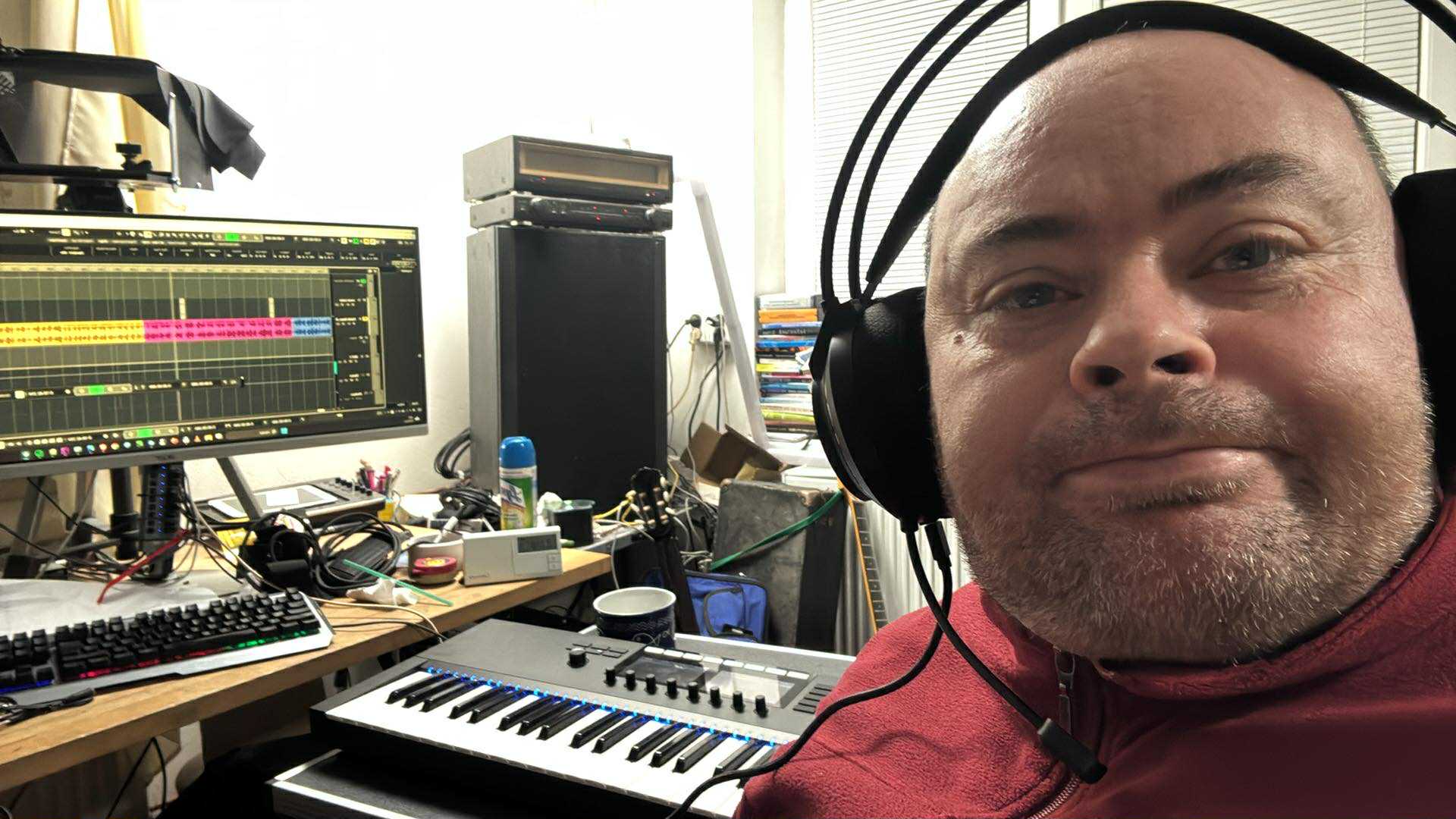
For most of my life, I worked in technical environments: IT, network architecture, ISP infrastructure — roles where clarity, precision and sustained focus weren’t optional. They were required.
I was good at it.
Until the same mind that helped me perform started working against me.
When high performance becomes a liability
In 2002, my brother Ivo collapsed at age 37. He was a high performer living under extreme, unmanaged stress. He survived the collapse but never recovered. He died in 2005.
I was on the phone with him the night it happened. I told him to see a doctor in the morning.
What followed were years in which I ran two full-time jobs simultaneously, held his family together, and built my own business — while falling apart from the inside.
I smoked 40 to 60 cigarettes a day.
I drank to switch off.
My system was running in overdrive, and I could not stop it.
I was an engineer who could fix complex network infrastructure. I could not fix my own stress response.
I didn’t lack motivation.
I lacked mental downshifting.
And nobody around me could explain how to do that — without spirituality, without therapy language, without pretending everything was a mindset problem.
Standard methods failed.
Coaching felt superficial.
Motivational frameworks didn’t match reality.
Most “mindset” advice ignores how the nervous system actually behaves under pressure.
What I needed wasn’t encouragement. It wasn’t insight.
I should say: hypnosis sounded like complete nonsense to me. I was a technical person. An engineer. I approached it with the same suspicion I’d apply to any unproven system — looking for the manipulation, ready to catch the trick.
Instead, I found a mechanism.
It was a way to temporarily disengage internal noise, reset my state, and then return to problem-solving with clarity intact.
That search eventually led me to NLP and advanced hypnotic processes — not as belief systems, but as tools.
Learning directly from the source
I trained directly with the original creators and senior figures of NLP and modern hypnosis, including:
- Dr. Richard Bandler (co-creator of NLP)
- Dr. Paul McKenna
- John & Kathleen LaValle
What interested me was repeatability.
Structure.
Predictability.
In other words: systems, not stories.
Why I built the Focus & Calm Protocol
The first audio I created wasn’t meant to be a product.
It was a practical tool — something I needed myself to interrupt overload, regain focus and stop wasting energy on things that do not matter.
It worked.
Not because it was relaxing.
But because it was precise.
A structured audio session. 13 minutes. It works by communicating with the subconscious in the state it actually responds to. No meditation. No affirmations. No requirement to believe in anything first.
This tool worked during the most difficult periods of my life. It kept me functional through grief, through business pressure, through loss. Since 2014 I have used it on myself daily — not as a patient, but as a practitioner who understands from the inside what it actually does.
Over time, others asked for it.
People with similar profiles. Similar pressure. Similar internal friction.
That became the foundation of the Focus & Calm Protocol.
Who I work best with
I work best with people who are:
- intelligent and capable
- used to responsibility
- successful on paper
- mentally overloaded beneath the surface
Founders. IT professionals. Analytical leaders.
People whose minds are powerful and therefore require proper handling.
A powerful mind that cannot be switched off is not an asset. It is a liability — until you learn to control the state.
If that’s you, you don’t need motivation.
You need space, clarity, and control over your own state.
Where to start
Try the first session. 13 minutes. No belief required.
Use it as a tool. Notice what changes.
If you notice no shift in your mental state afterward, stop there. Most people notice something in the first session — a quieter background, a clearer head, a faster return to baseline.
Start with the Focus & Calm Protocol
No account needed. Just press play.